Screening Smarter, Not Harder
Panda Voiceover · Talent Onboarding & ML-Assisted Screening
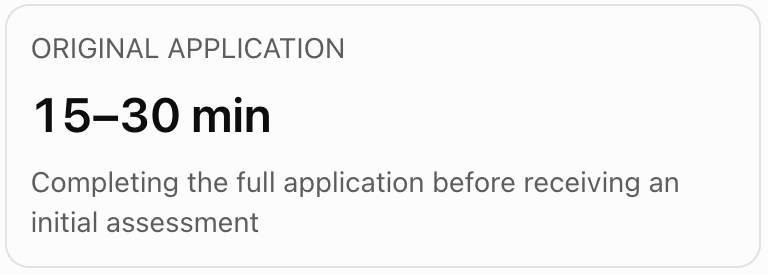
The original Panda Voiceover talent application required aspiring voice actors to complete personal details, pricing, voice sample uploads, and payment information before knowing whether they met the platform’s requirements. With more than 90% of applications failing the initial screening, the process created unnecessary effort for applicants and repetitive review work for the team.
That challenge shaped a new approach to talent onboarding: assess voice samples earlier, explore machine learning to support initial screening, and preserve human judgment through interviews and opportunities to request manual review.
UX Research · Workflow Redesign · Machine Learning · Data Analysis
01 / THE ORIGINAL EXPERIENCE
Why Complete an Entire Application Just to Be Rejected?
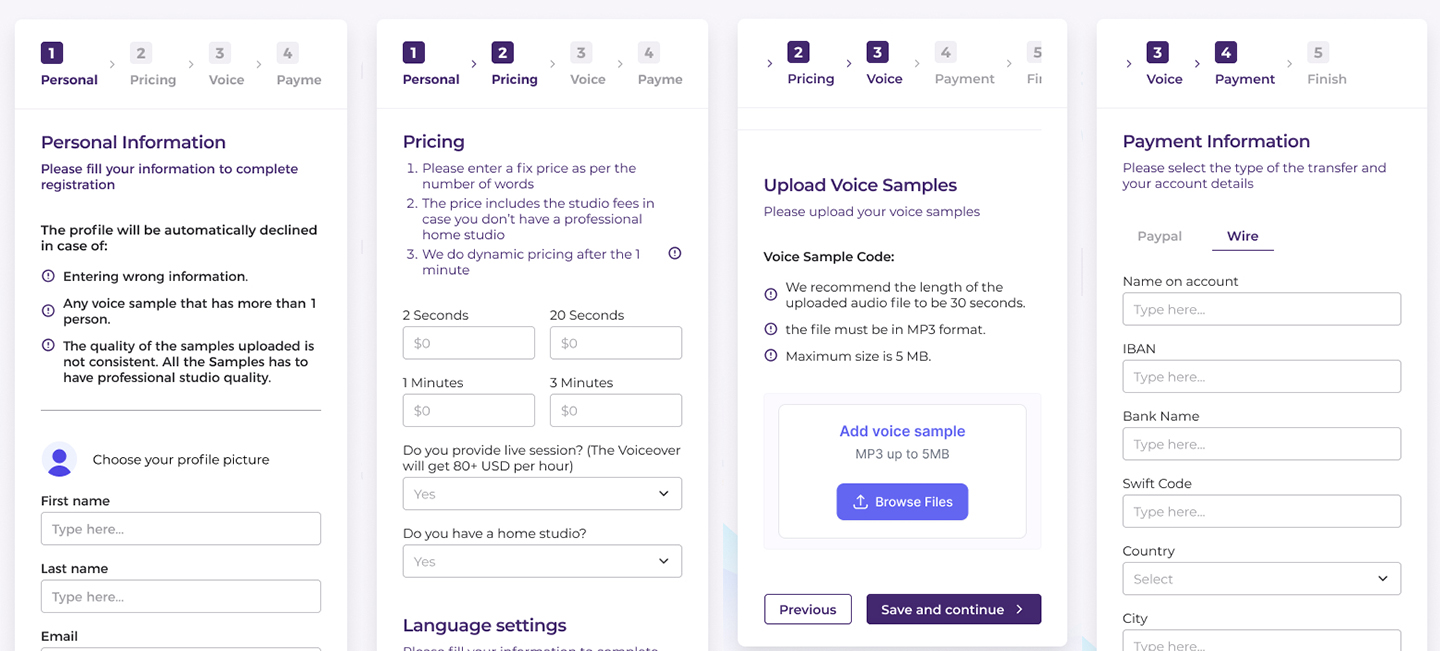
The original Panda Voiceover onboarding process required aspiring voice talent to complete several steps: personal information, pricing, voice sample uploads, and payment details.
Only after submitting the application would they learn whether they met the platform’s professional requirements. Many applicants were unfamiliar with commercial voiceover standards, including recording quality, equipment, and performance expectations.
This created a frustrating experience for applicants who invested time in the process, only to discover they weren’t ready to qualify.
What if we could evaluate readiness before asking applicants to complete everything else?
02 / THE CHALLENGE
One Process. Two Sides of the Same Problem.
For Aspiring Voice Talent
Many applicants underestimated what professional voiceover work requires. Having a pleasant voice wasn’t always enough. Recording quality, suitable equipment, and performance skills often determined whether someone met the platform’s standards.
Yet applicants had to invest time completing the entire application before receiving that assessment.
For the Panda Voiceover Team
More than 90% of applications failed the initial screening. The team still had to listen to and evaluate large numbers of submissions, often identifying the same recurring issues.
This repetitive work consumed time and attention that could have been directed toward qualified talent and other operational priorities.
The Design Opportunity
How might we identify talent readiness earlier, reduce unnecessary work for both sides, and preserve human judgment in the screening process?
03 / THE PROPOSED SOLUTION
Screen Earlier. Keep Humans in the Loop.
We examined approximately 5,000 historical talent applications to explore how machine learning could support the initial screening process. The goal was to identify patterns associated with professional readiness and use those insights to rethink when applicants should be evaluated.
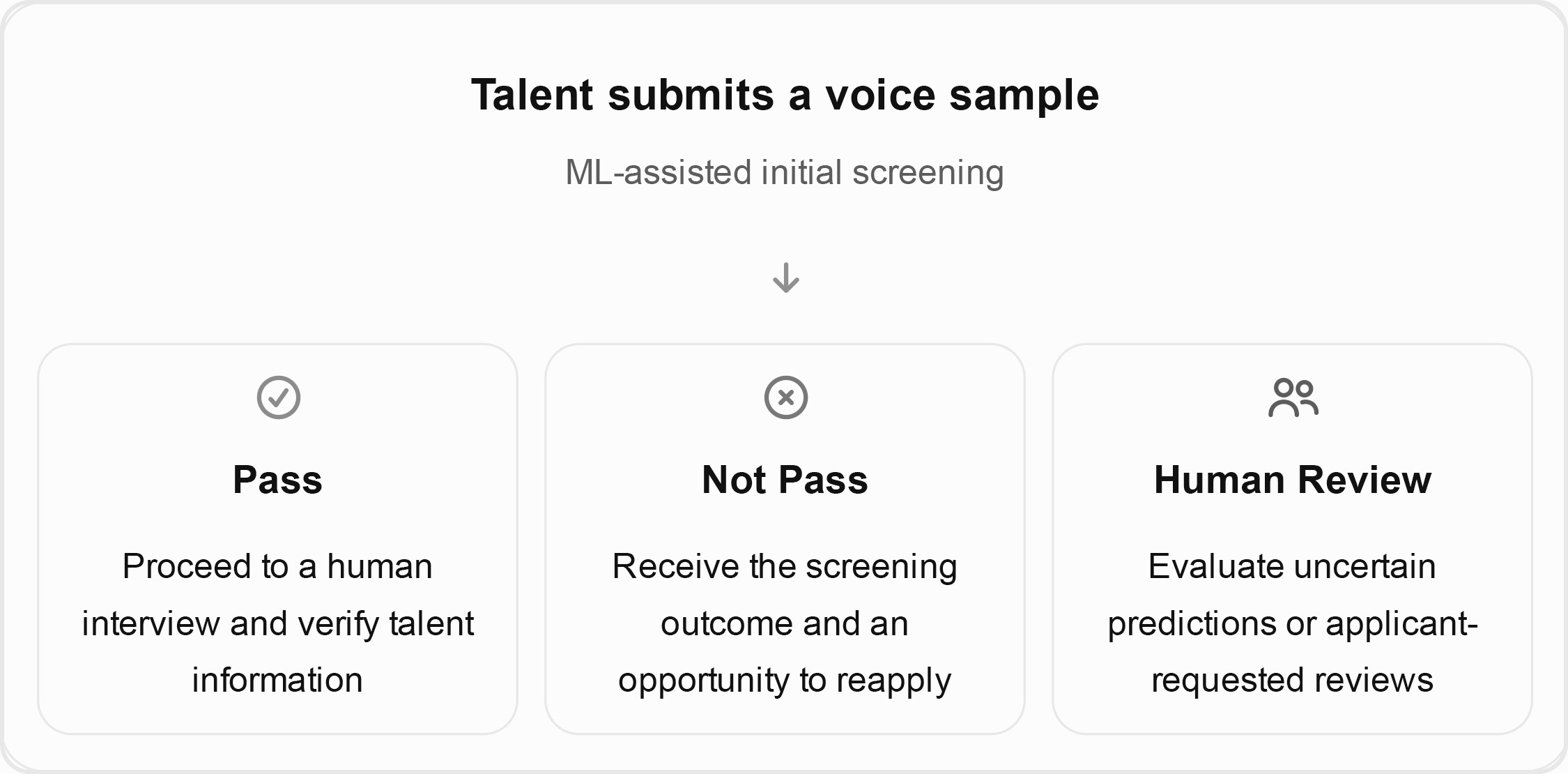
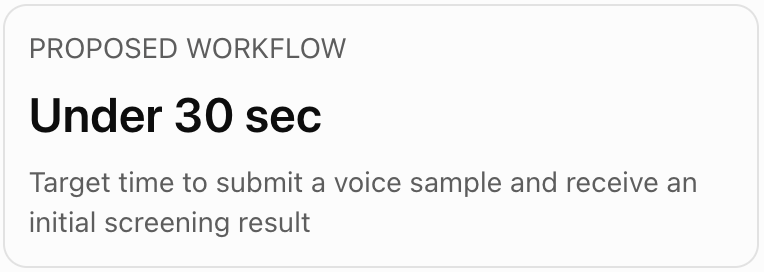
Instead of asking applicants to complete the entire registration process upfront, the redesigned workflow begins with a voice sample. An ML-assisted assessment determines whether an applicant passes, is rejected, or requires further evaluation.
When the model cannot make a confident assessment, the application is routed to human review. Applicants who disagree with a rejection can also request a manual evaluation.
The goal is to automate routine screening decisions without removing human judgment when it matters.
04 / BEYOND THE SCREENING
A Better Starting Point, Not a Replacement for People
Passing the initial screening is only the beginning. A human interview allows the Panda Voiceover team to verify each applicant’s information, understand their professional capabilities, answer questions, and build a relationship with the talent.
This verification also supports the broader platform experience. Accurate, structured talent profiles are essential for reliable filtering and relevant voice recommendations when clients describe what they’re looking for.
By moving the initial assessment earlier, the proposed workflow aims to reduce repetitive review work while allowing the team to focus its attention where human judgment adds the most value.